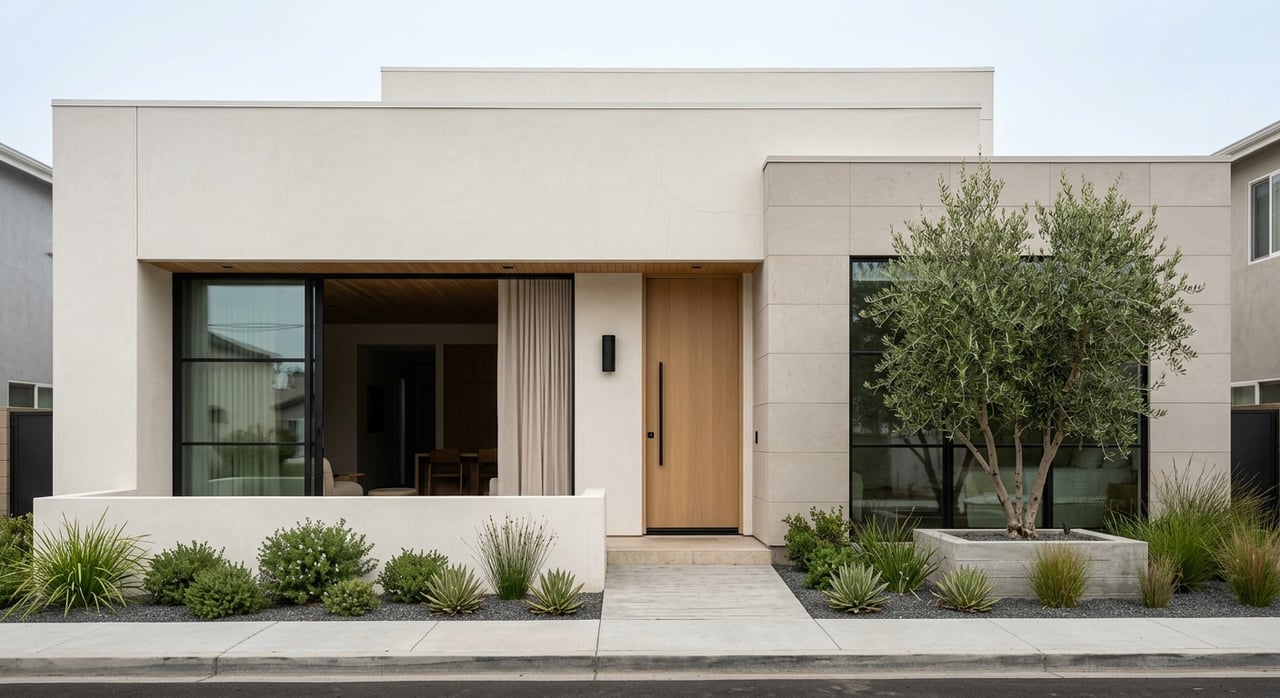
Looking at homes in Venice and wondering what really defines the neighborhood? The answer is not one signature look, but a layered mix of cottages, bungalow courts, canal homes, walk-street houses, and bold modern design. If you want to understand why one Venice property feels tucked away and historic while another feels sleek and architectural, this guide will help you see the patterns that shape value, privacy, and long-term appeal. Let’s dive in.
Venice Style Starts With Layers
Venice is often described as eclectic, and that description is backed by the neighborhood’s built history. SurveyLA identified three residential historic districts, a distinct cluster of beach cottages, and about 15 intact bungalow courts in Venice. That means Venice homes are best understood as a series of development eras rather than one dominant architectural style.
For you as a buyer or seller, that matters. In Venice, architecture is closely tied to setting, lot layout, and how a home relates to the street, canal, or walk path. A home's appeal often comes from the full context, not just the label attached to its design.
Early Venice Homes and Bungalows
Some of Venice’s residential character begins with small-scale early homes, including cottages and Craftsman-era bungalows. These properties reflect the neighborhood’s early growth and still shape how many blocks feel today. They tend to read as more intimate in scale, with a human-sized presence that stands out in a city known for larger homes.
SurveyLA highlights Craftsman homes as part of Venice’s early residential development. One local example is the Irvin Tabor Family Residences in Oakwood, made up of eight buildings, including five one-story bungalows arranged around a central courtyard. That arrangement shows an early pattern in Venice where shared outdoor space was part of the design, not an afterthought.
Why bungalow courts matter
By the 1920s, bungalow courts had become an important housing type in Venice. SurveyLA says about 15 intact examples remain, and they span a wide range of revival styles, including Craftsman, American Colonial Revival, Spanish Colonial Revival, Tudor Revival, French Norman Revival, and Streamline Moderne.
This variety is one reason Venice feels visually rich. Even within the bungalow court category, you are not seeing one repeated formula. You are seeing a neighborhood that evolved through different tastes and time periods while keeping a compact, pedestrian-friendly housing pattern.
A key example in Venice
Marco Place Court in the Millwood Walk Street district is a Spanish Colonial Revival bungalow court often cited as a strong local example. The LA Conservancy notes that bungalow courts became an important housing form because they balanced density, affordability, green space, and shared community space.
That history still matters when you evaluate Venice real estate today. Homes within preserved or recognizable housing patterns often carry a different kind of appeal than standalone properties on more conventional lots.
Canal Cottages Create Iconic Venice Character
If there is one image many people associate with Venice living, it is the canals. The Venice Canals began in the early 1900s as part of Abbot Kinney’s original Venice project. The district’s earliest homes were small one-story cottages designed for summer use, and the area is now recognized as a historic district with both older and newer architecture.
The Venice Canals Association describes today’s canal district as a mix of Venetian villas, Spanish casitas, rambling beach houses, ultramodern glass structures, and surviving original bungalows. That description captures something important about Venice: the canals did not freeze in time. Instead, they became a place where older forms and newer design sit side by side.
What canal homes feel like
Canal homes are defined by more than style. They are shaped by water frontage, foot traffic, view corridors, and the balance between openness and privacy. The city’s coastal planning documents emphasize improving public access around the canals and lagoon without invading the privacy of adjoining residents.
That planning goal helps explain why canal homes can feel both exposed and secluded at the same time. You may have a highly visible setting, but thoughtful setbacks, landscaping, orientation, and window placement often play a major role in how private a home actually feels.
Walk Streets Shape the Living Experience
Venice walk streets are one of the neighborhood’s most distinctive features, and they are better understood as a planning form than a decorative idea. A 2015 Venice report explains that some early subdivisions used sidewalks instead of full streets to reduce costs and create a courtyard effect. The city’s current coastal plan defines a walk street as a public street improved for pedestrians, but not for vehicles.
That design changes how homes relate to one another. Instead of facing rows of parked cars and driveways, many walk-street homes open toward landscaped pedestrian paths. The result is a softer, more neighborhood-oriented experience that feels very different from a standard curb-front block.
Why walk-street homes feel private
The coastal plan says walk streets should be preserved at their current widths, with vehicle access limited to emergency use. It also describes gardens and patios as a transition zone between public pathways and private homes.
That transition zone is a big part of the appeal. In practical terms, it means a home can feel connected to its surroundings without giving up a sense of retreat. For many buyers, that blend of pedestrian access, greenery, and privacy is one of the most compelling parts of Venice living.
Modern Venice Brings Design Experimentation
Venice is not only about cottages and historic charm. SurveyLA also identifies late modernism and post-modernism in the neighborhood, which helps explain the presence of boxy, design-forward homes and compact compounds across Venice.
This is one of the reasons Venice attracts architecture-minded buyers. The neighborhood has room for preserved historic forms, but it also has a long track record of residential experimentation.
Venice as a design laboratory
The LA Conservancy points to the 2-4-6-8 House as a cube-like modern residence in Venice. It also highlights Frank Gehry’s Indiana Avenue Houses, also known as the Arnoldi Triplex, for their loft-like units and highly individual forms.
Together, these homes show how Venice became a place where residential architecture could be more expressive. If you are drawn to design, Venice offers a broader range than many neighborhoods that are tied more tightly to one period or one visual identity.
Live-work design still matters
Venice’s newer architecture also reflects the neighborhood’s creative and mixed-use character. Projects like Venice Lofts and Ocean Front Walk show how residential design has adapted to include live-work layouts, mixed-use buildings, roof decks, and privacy-conscious setbacks.
That direction is also reflected in local planning. The Venice Coastal Zone Land Use Plan encourages mixed-use development and notes that the Commercial Artcraft designation exists so artisans can live, create, and market their work. The plan also says mixed-use development is intended to reduce car dependence and encourage pedestrian activity.
What Architecture Means for Value
In Venice, style alone rarely explains pricing. Market data points to a high-value neighborhood overall, with Redfin reporting a March 2026 median sale price of $1,887,500 and 81 median days on market, while Zillow reported an average home value of about $1.83 million. Those are different measures, but both support the same takeaway: Venice remains a premium market.
Within that market, setting can drive major differences. Redfin reported a 928-square-foot cottage on Commonwealth Avenue selling for $1.375 million and a 2,901-square-foot Grand Canal home selling for $3.23 million in May 2026. That gap suggests canal frontage, lot size, and property type can be just as important as architectural style.
The value drivers to watch
If you are comparing homes in Venice, a few recurring factors tend to shape long-term appeal:
- Walk-street placement
- Canal or beach adjacency
- Historic housing forms such as bungalow courts
- Privacy created by layout and orientation
- Live-work flexibility in the right setting
- Relative rarity under current planning rules
These factors matter because many of Venice’s most desirable housing patterns are hard to reproduce today. Local planning continues to emphasize preservation of pedestrian orientation, access patterns, and walk-street character, which can reinforce the appeal of homes that already embody those traits.
Why Venice Feels Enduring
Venice’s residential identity is tied to more than architecture. It is also tied to how the neighborhood moves and feels. The canal district still functions as a neighborhood of roughly 350 homes and families, and city planning continues to support the pedestrian layout and historic access patterns that make Venice distinct.
That combination gives Venice unusual staying power. You are not just buying into a look. You are buying into a built environment where cottages, courts, canals, walk streets, and modern infill all contribute to a layered sense of place.
For sellers, that means the story behind a home matters. For buyers, it means the smartest way to evaluate Venice is not to ask which single style defines it, but to ask how a property fits into the neighborhood’s broader architectural fabric.
If you are thinking about buying or selling in Venice, working with a team that understands architecture, positioning, and the nuances of Westside demand can make a meaningful difference. Connect with The Umansky Team for tailored guidance on navigating Venice real estate with clarity and confidence.
FAQs
What architectural styles define Venice homes?
- Venice homes are defined by a mix of early cottages, Craftsman houses, bungalow courts, canal homes, walk-street residences, late modern homes, and newer live-work or mixed-use designs.
Why are Venice walk-street homes so distinctive?
- Venice walk-street homes are distinctive because they front pedestrian pathways instead of typical vehicle streets, creating a more garden-oriented and privacy-conscious layout.
Are Venice canal homes mostly historic cottages?
- No. The canal district includes surviving original bungalows as well as later homes such as Venetian villas, Spanish casitas, beach houses, and ultramodern residences.
Do bungalow courts still exist in Venice?
- Yes. SurveyLA identified about 15 intact bungalow courts in Venice, making them an important part of the neighborhood’s residential identity.
How does architecture affect home value in Venice?
- In Venice, value is often shaped by a combination of architecture, location, lot size, privacy, canal or beach adjacency, and whether a home sits in a rare or preserved housing pattern.
Is modern architecture common in Venice?
- Yes. Venice includes late modern and post-modern homes, plus more recent live-work and mixed-use projects, which reflects the neighborhood’s long-standing design experimentation.