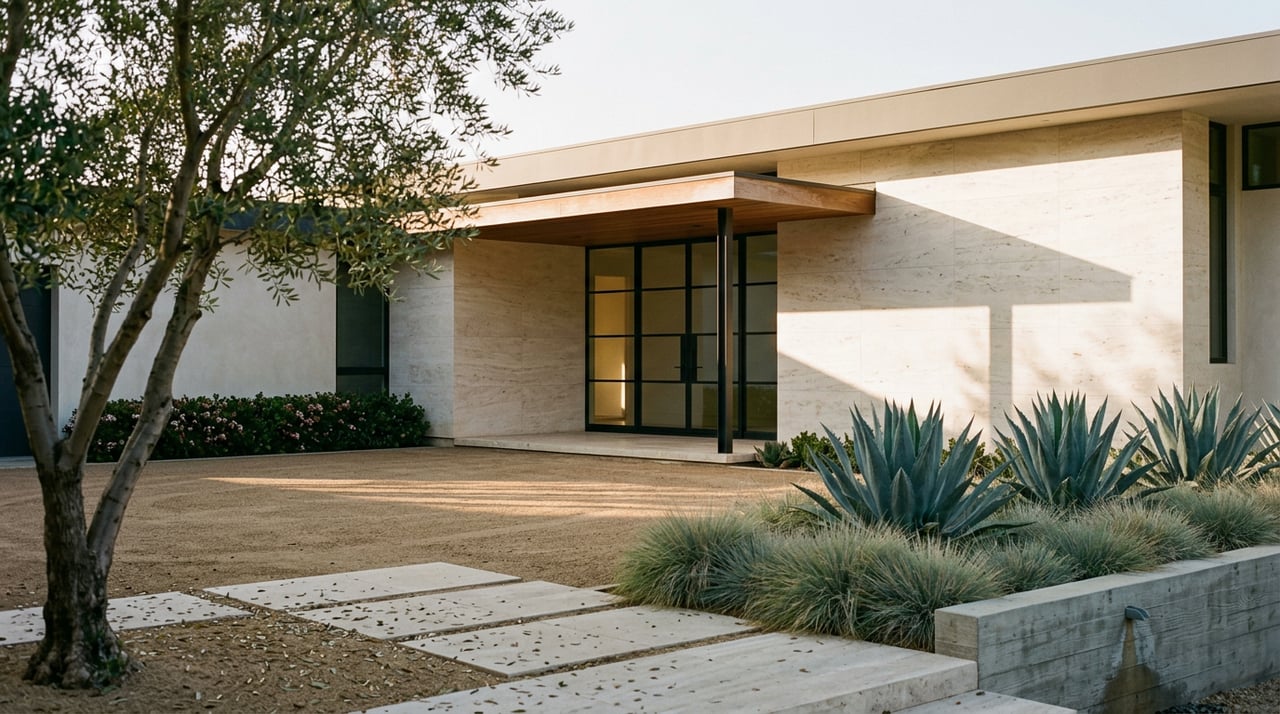
Drive south of Ventura Boulevard into the Encino Hills on any weekend this summer and you'll pass at least one property with scaffolding up and a dumpster in the driveway, a home that by every visible measure could have sold this year. The lot is right, the schools are right, the buyer pool for a renovated estate south of the boulevard has been steady all year. The owner isn't stuck. The owner did the math and decided that listing the house would cost more than keeping it.
That decision is showing up across Encino's hillside pockets, in Royal Oaks, in Amestoy Estates, in the stretch of 91436 where estate pricing now regularly clears eight figures. The reason has almost nothing to do with buyer demand and almost everything to do with a single number written into the Los Angeles Municipal Code: $5.4 million.
A Cliff, Not a Slope
Measure ULA, the city's transfer tax approved by voters in 2022, took effect in April 2023 and has adjusted upward every July 1 since. For any closing after June 30, 2026, the thresholds sit at $5.4 million and $10.9 million, up from $5.3 million and $10.6 million the year before, according to the Los Angeles Office of Finance. Cross the lower line and the seller owes 4 percent of the entire sale price. Cross the higher one and it's 5.5 percent.
That word, entire, is what catches sellers off guard. ULA is not a marginal tax like the federal income bracket system, where only the dollars above a line get taxed at the higher rate. It's a cliff. A home that closes at $5,399,999 owes only the standard city and county transfer taxes, a combined 0.56 percent, or roughly $30,000. The same home closing one dollar higher owes $216,000 in ULA on top of that. Move a $10.85 million sale up to $10.95 million and the jump is closer to $170,000. There is no primary residence exemption, and a 1031 exchange won't help either, since ULA is a transfer tax triggered by the deed recording, not a capital gains tax tied to profit.
| Sale price | ULA owed | Combined with base transfer tax |
|---|---|---|
| $5,399,999 | $0 | About $30,000 |
| $5,400,000 | $216,000 | About $246,000 |
| $10,900,000 | $599,500 | About $660,000 |
These figures come from the published 2026 rate structure and are meant to illustrate the shape of the tax, not to substitute for a closing statement. Anyone pricing a home near either line should run the exact numbers with their own tax advisor before setting an asking price.
Encino Sits Entirely Inside the Line
Some of the Westside's most recognizable luxury addresses never touch this tax at all. Beverly Hills, Santa Monica, Culver City and a handful of other independent cities inside Los Angeles County are incorporated separately from the City of Los Angeles, which means Measure ULA doesn't apply there regardless of price. We've written before about what that exemption means for Beverly Hills buyers and sellers specifically.
Encino gets no such carve-out. It sits entirely within the City of Los Angeles, which means every closing here, from a starter condo to an estate on a half acre south of Ventura, is subject to ULA the moment the price clears the threshold. And a meaningful share of Encino's inventory now does. The 91436 zip code, which covers the hills and the premium flats south of Ventura, carried a median listing price near $3.6 million as of June 2026, up more than 8 percent year over year. Move into Royal Oaks or Amestoy Estates and pricing for a well-positioned estate routinely runs well past $5 million, with the top of the market now reaching $8 million and above.
That's not the whole neighborhood. Encino's broader median sale price sat closer to $1.7 million over the three months ending in May 2026, and citywide list prices across all of Encino were down roughly 12 percent from the year before. Most of that softening is happening in the flats and the mid-tier, where ULA never enters the conversation. It's the estate tier, the part of Encino built for buyers who could write a check well north of $5 million, where the tax is quietly changing behavior.
What Owners Are Actually Doing About It
Researchers at UCLA found that the tax reduced the likelihood of a Los Angeles property selling above $5 million by 55 percent since it took effect, a signal that owners aren't just grumbling about ULA, they're changing their plans around it. Permit data reviewed by The Real Deal this summer showed a 46 percent increase in remodel permits for high-end homes since the tax began, and the trend is concentrated in exactly the neighborhoods where Encino's estate tier lives.
"Measure ULA has absolutely created hesitation among homeowners considering a sale."
That's Emil Hartoonian, an agent with The Agency who covers Sherman Oaks, Studio City and Calabasas, describing what he's seeing in conversations with Valley homeowners this year. The same reporting detailed a Brentwood case where a homeowner planning to sell realized the combined bite of ULA and standard commission would consume about 11 percent of proceeds, and chose to reinvest in the current home instead. Gesh Group, a firm doing high-end remodel work in Sherman Oaks, Encino, Bel Air and Brentwood, put typical project costs for that kind of remodel between $1 million and $6 million, the range where it starts to look cheaper than paying the tax on a sale.
None of this means Encino's estate owners are trapped. It means the calculation before listing now has a second variable beyond comps: does this sale price land above or below the line, and if it does, is remodeling a better use of that money than handing a six-figure check to the city at closing.
Why the Softer Headline Doesn't Apply Up Top
Here's the part that matters if you're shopping rather than selling. A market with prices down 12 percent and days on market stretching toward 80 sounds like a buyer's market across the board, and for Encino's flats and mid-tier homes, it largely is. But if ULA is pulling estate-level sellers off the market and into renovation instead of a listing, the inventory that actually competes for a $5 million-plus buyer isn't loosening at the same pace, and in some pockets it's getting tighter even while the neighborhood-wide numbers suggest otherwise.
That's the gap between what the median tells you and what's actually happening at the price point most relevant to a serious luxury buyer or seller in Encino. The number worth watching isn't the citywide median. It's how many estate-tier owners are choosing to stay and rebuild rather than list, and that number is being set in Sacramento's tax code as much as it is by anything happening on Ventura Boulevard.
Planning a Sale Near the Line
For owners weighing a 2026 or 2027 sale, the practical takeaway is precision. A property realistically worth $5.3 million to $5.5 million needs its pricing strategy modeled on both sides of the threshold before it goes to market, not after an offer comes in. The tax has already survived early legal challenges, and a broader effort to roll back local transfer taxes statewide was pulled from the November 2026 ballot after a compromise reached earlier this summer, so ULA is not going anywhere in the near term. Sellers near the line are better served planning around it than waiting for it to disappear.
Does ULA apply if I transfer the property to a family member instead of selling it? The exemptions are narrow and generally limited to qualified nonprofit and government transferees. Family transfers and typical estate planning moves don't automatically avoid the tax, and anyone considering this route should confirm the specifics with a California real estate attorney before assuming an exemption applies.
Can a 1031 exchange defer the ULA portion of my tax bill? No. A 1031 exchange can defer capital gains tax on investment property, but ULA is a transfer tax triggered by the deed recording itself, and it applies regardless of whether the seller reinvests the proceeds.
Are any Encino properties exempt from ULA? Only if the transaction itself qualifies for one of the narrow nonprofit or government exemptions defined in the Los Angeles Municipal Code. Location within Encino offers no exemption, since the entire neighborhood sits inside city limits.
If you're weighing whether to list an Encino estate this year, remodel and hold, or start a search in a market where the real inventory picture doesn't match the headline, The Umansky Team can walk through the numbers specific to your address and your timeline. Contact Us.